
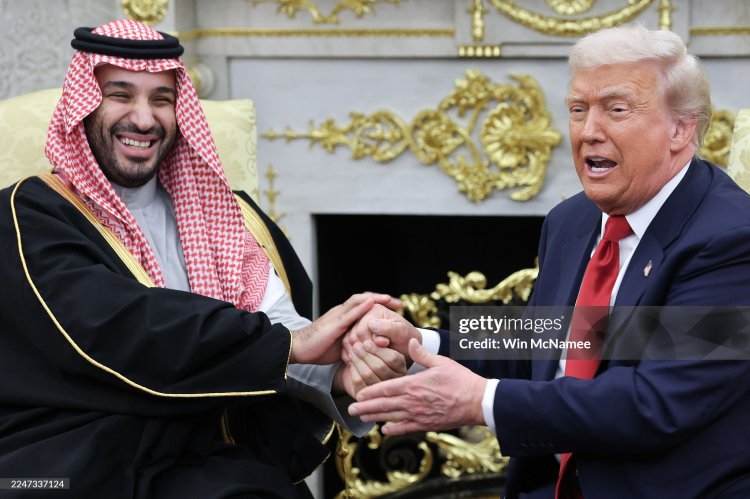
White House of the United States Of America showcased a beautiful display of international influence as President Donald John Trump on Tuesday, 18th November 2025 hosted a sumptuous black-tie gala at the palatial White House in honour of Saudi Arabia’s Crown Prince Mohammed Bin Salman Al Saud. The dinner, more than a formal state event was an important signal of deepening United States—Saudi Arabia economic and strategic ties: a gathering of titans of business, power brokers, and global leaders that underscored a new chapter in transatlantic diplomacy and high-stakes investment.
Under the gleam of crystal chandeliers and amidst the refined elegance of formal dress, the White House’s East Room was transformed into a stage for diplomacy. Guests included CEOs of major American corporations, top financiers, defense leaders, and key political figures—all united to honour one of the Arab world’s most influential figures.
President Trump, radiant in a sharp black tuxedo, welcomed Crown Prince Mohammed Bin Salman Al Saud with warmth and admiration. In his remarks, President Trump praised the Crown Prince as a visionary leader whose bold reforms and investment ambitions align with a renewed spirit of United States—Saudi Arabia cooperation.
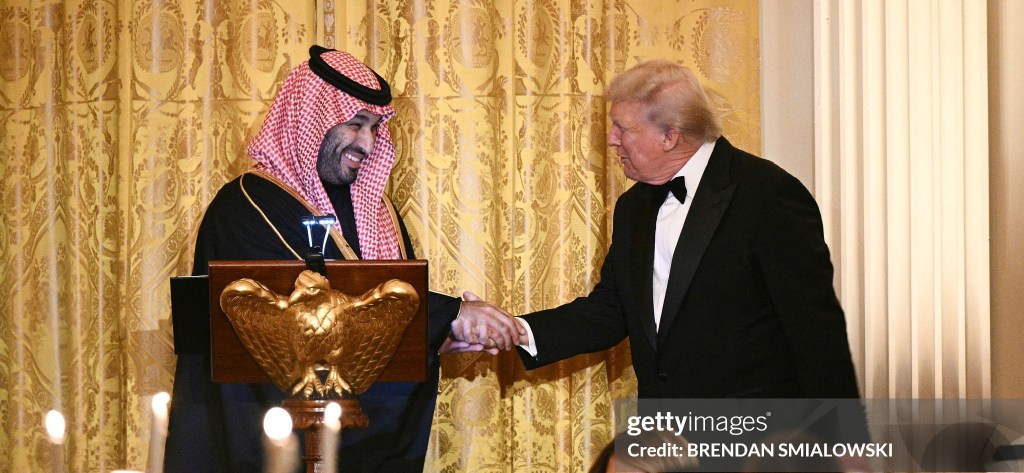
The evening was steeped in symbolism. Every detail from the menu crafted by White House chefs to the carefully curated guests list was meant to convey not only respect, but ambition. This was not merely a ceremonial dinner: it was a platform for reaffirming economic alliances and signaling future joint ventures.
At the heart of the event was a series of high-stakes announcements that reflect the widening scope of United States—Saudi Arabia collaboration. Building on the momentum of recent negotiations, President Trump and the Crown Prince have reaffirmed plans for massive investment across critical sectors of energy, defense, artificial intelligence, and infrastructure.
The elite gathering follows a landmark economic partnership agreement signed earlier in the year 2025. According to both leaders, the potential Saudi Arabia investment in the United States is projected at the budget of $1,000,000,000,000 (One Trillion United States Dollars), a bold expression of confidence in the American economy.
Moreover, in a significant diplomatic breakthrough announced during the dinner, President Trump elevated Saudi Arabia to the status of “Major Non-NATO Ally”. This designation opens doors for deeper military cooperation, faster technology transfers, and more robust security commitments.

Defense cooperation was also front and center. Talks confirmed a strengthened strategic defense pact; part of a pact some intellectuals describe as the most critical evolution of the United States—Saudi Arabia alliance in decades. Notably, the White House indicated that Saudi Arabia may purchase advanced American systems, including F-35 fighter jets, representing a historic shift in regional geopolitics.
Key American business figures were among the haute-cuisine crowd: tech magnates, Wall Street luminaries, and private equity heavyweights mingled with Saudi royalty. The distinguished guests-list for the dinner features Elon Musk, Brian Armstrong, Cristiano Ronaldo, Tareq Amin, David Ellison, Brendan Bechtel, William Clay Ford Jr., Larry Fink, Mary Barra, Marc Benioff, Albert Bourla, Gianni Infantino, Tim Cook, Jane Fraser, Jensen Huang, Alex Karp, Steve Schwarzman, Vlad Tenev, Mike Wirth, Michael Dell, Chuck Robbins, Lisa Su, Arvind Krishna, Sarah Al-Suhaimi, Greg Brockman, Saudi Arabia Royal Families, Saudi Arabia Government Officials, United States Government Officials and the Trump Families were present significantly underscoring the convergence of global capital and ambition. Their attendance signals that this is not simply a diplomatic nicety, but a genuine business moment with real deals in the offing.
These leaders now stand at the intersection of geopolitics and commerce, ready to deploy capital into projects that promise not just profit, but geopolitical significance.
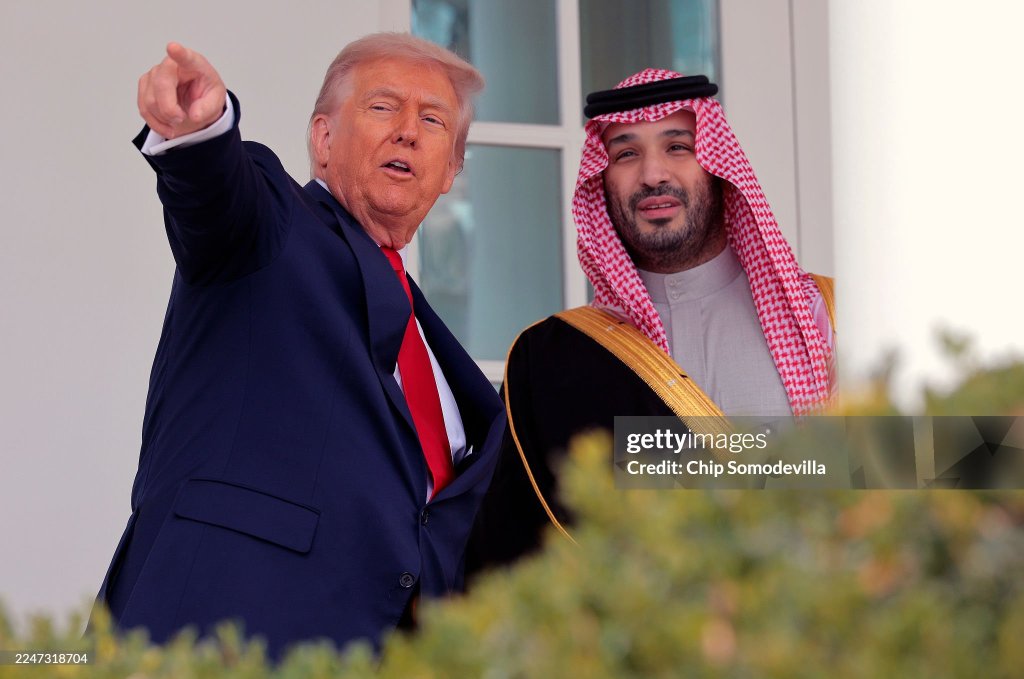
While the dinner was resplendent and symbolic, the implications run far deeper and here are the highlights of the event ⬇️
• United States—Saudi Arabia Alliance Reinforced: President Trump has repeatedly described this as a momentous strengthening of the decades-long United States—Saudi Arabia alliance. The gala was a public affirmation that these two nations are not just international partners, but their visions are now more tightly aligned than ever.
• Economic Diversification For Saudi Arabia: For Crown Prince Mohammed Bin Salman Al Saud, this represents a tangible stride towards his Vision 2030: a bold plan to diversify Saudi Arabia’s economy away from oil, broaden its technological base, and secure its future in global markets.
• United States Job Creation and Technological Investment: The announced investments are expected to catalyze job creation in the United States, particularly in high-tech sectors. President Trump emphasized the potential for American innovation and infrastructure to benefit, reinforcing his “America First” economic narrative.
• Geopolitical Implications: Beyond business, the defense elements of this rapprochement could reshape regional power balances. Saudi Arabia’s elevated ally status and access to advanced United States military platforms may shift dynamics in the Middle East—especially amid broader conversations about security, arms, and influence.
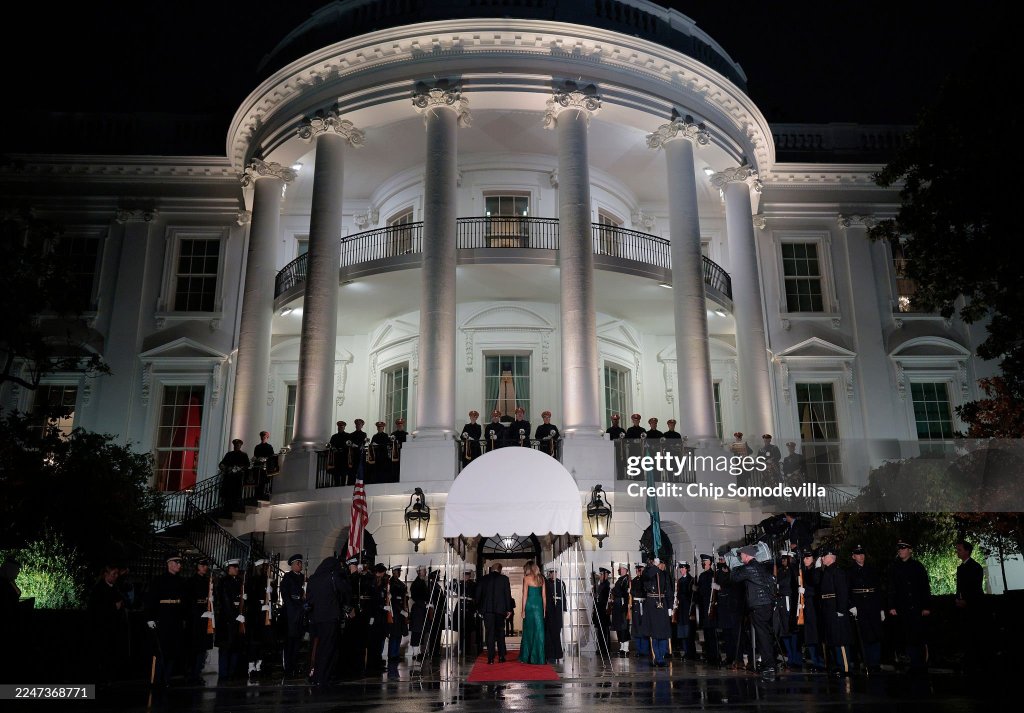
Elegantly beyond the dinner and the ambience of opulence, the international event was a meticulously orchestrated performance of global power. For President Trump, it was an opportunity to flex both his political and business muscles. For Crown Prince Mohammed Bin Salman Al Saud, it was a stage to assert his role not just as regional leader, but a global investor.
The black-tie elegance, the who-is-who of the business world, the staggering financial pledges—all speak to a new era of the United States—Saudi Arabia relations that transcends traditional diplomacy.
As the evening’s luminaries departed, the real work begins. The grand announcements now face the test of execution. Can the ambitious investments be realized? Will the defense commitments translate into tangible security cooperation? And perhaps most importantly: will this symbolic gala mark a turning point—not only in the United States–Saudi Arabia relations, but in the way global capital and power are brokered on the world stage?
If the promises made during the event are fulfilled, this elite dinner could be remembered not just as a spectacular social event but as a foundational moment of global dominance in 21st-century geopolitical capitalism.
 MAGNIFICENZA