
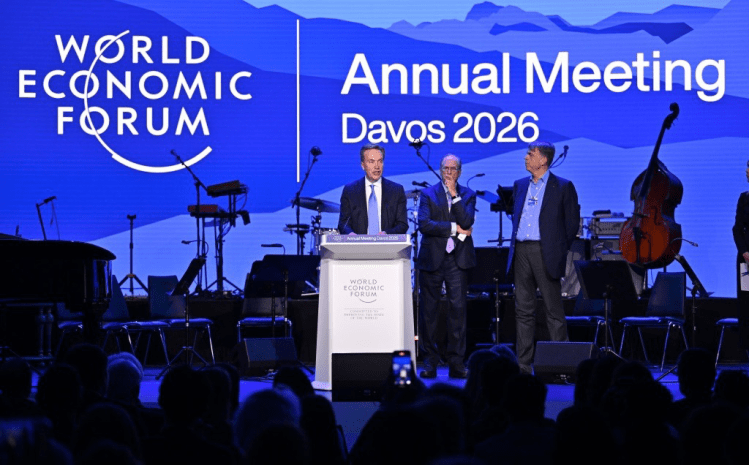
For five days in January 2026, the Swiss Alpine resort town of Davos became the epicenter of global discourse. World Economic Forum’s 56th Annual Meeting brought together nearly 3,000 leaders from more than 130 countries, including heads of state, government ministers, CEOs of multinational corporations, civil society figures, and influential thought leaders.
Under the official theme “A Spirit of Dialogue”, the forum sought to navigate a world marked by intense geopolitical friction, rapid technological upheaval, and new economic fault lines. What unfolded in Davos 2026 was far more than a traditional elite gathering: it was a deep reflection on how the global order is being reshaped in real time.
The Forum entered the year with global tensions at a high. Divisions among traditional allies particularly between the United States and European partners were thrust into the spotlight when U.S. President Donald J. Trump delivered a keynote address that set the tone for much of the week’s debate.
Donald J. Trump’s remarks which emphasized economic nationalism, trade recalibration, and assertive diplomacy, drew sharp reactions from allies at the forum. Donald J. Trump’s stated goals included strong economic measures to rebalance trade and a renewed emphasis on “America First” priorities. This stance reignited debate around U.S. global leadership and its future orientation within alliances such as NATO.
French President Emmanuel Macron responded with a stark warning about a potential drift toward a “world without rules”, underscoring concerns about the erosion of the rules-based international order established after World War II.
Geoeconomic tensions quickly emerged as a central theme. The weeks leading up to Davos 2026 had seen rising trade frictions, including threats of tariffs by the United States against European partners, most notably surrounding strategic territories such as Greenland, a flashpoint that drew unusually intense discussion at the Annual Meeting and rattled markets.
This dynamic represented a broader shift: economic interdependence no longer just as a foundation for cooperation, but increasingly as a tool of leverage and strategic contestation. Forum participants, including economists and policy strategists, highlighted how economic ties are both binding and weaponized in today’s multipolar world; a top risk identified in the Global Risks Report 2026.
Political rhetoric in Davos often mirrored the fracturing nature of global diplomacy. Canadian Prime Minister Mark Carney delivered a speech that many observers interpreted as a call for middle powers to rally together to uphold the rules-based order amid what he described as a “rupture” rather than a simple transition.
Mark Carney articulated the plight of nations caught between geopolitical fault lines, urging pragmatic cooperation among medium-sized states to protect collective interests against coercive economic tactics by larger global actors.
The annual forum also featured the Board Of Peace, a new diplomatic construct introduced during Davos 2026 which is the multilateral framework for coordinating post-conflict reconstruction in the Gaza Strip, signed by officials from over a dozen nations alongside U.S. President Donald J. Trump. While the initiative’s details remain evolving, its symbolic significance was widely debated as either a breakthrough in diplomatic coordination or a contested instrument of strategic positioning.
On the technology front, leaders grappled with the realities of Artificial Intelligence (AI) transitioning from theoretical promise to everyday impact. As economies worldwide accelerate digital transformation, questions about governance, ethics, labor markets, and equitable benefit distribution dominated panels and bilateral exchanges. IMF Managing Director Kristalina Georgieva issued one of the most provocative warnings of the week, framing AI as a potential “tsunami” for labor markets. Kristalina Georgieva noted that automation could transform or replace up to 60% of jobs in advanced economies and 40% globally, with disproportionate impacts on young and entry-level workers.
This insight underscored a critical lesson: the economic promise of AI cannot be divorced from social and governance frameworks that safeguard livelihoods, ensure fairness, and support workforce adaptation. Industry leaders echoed this shift from potential to pragmatic implementation. Firms such as Accenture and NVIDIA emphasized the urgency of moving beyond pilot programs into scalable solutions that embed AI as core to operational and strategic frameworks.
Beyond political and technological debates, Davos 2026 saw energetic discussions about economic growth, investment strategies, and the role of strategic partnerships in shaping the future of markets. Several national delegations used the platform to showcase reform efforts and investment opportunities. South Africa, for instance, highlighted substantive progress on economic reforms that boosted investor confidence, including removing the nation from the FATF greylist and achieving a sovereign credit rating upgrade.
Likewise, the United Arab Emirates emerged as a notable success story. The UAE delegation, one of the largest at the forum pursued a comprehensive agenda focused on building practical solutions and fostering global partnerships in AI, digital government, and humanitarian assistance. Partnerships launched in Davos 2026 aim to extend cooperation well beyond Swiss Alpine landscapes, including strategic initiatives like the Global Strategic Intelligence Programme and expansion of smart health systems.
Although geopolitical and technological narratives dominated headlines, the forum participants also reaffirmed that climate and health security remain foundational global challenges. Climate experts articulated that global temperatures are on trajectory to exceed critical thresholds within years unless robust interventions are pursued. Environmental scientists and policy leaders voiced increasingly urgent calls for adaptation strategies, alongside mitigation efforts, as climate change effects become more visible and disruptive.
Parallel to this, voices from public health circles reminded delegates that global readiness for future pandemics remains insufficient. Recent analyses noted that climate change and geopolitical fragmentation intensify the risk of outbreaks, yet coordinated preparedness has not kept pace.
These discussions underscored a persistent paradox: while global problems are interconnected, solutions still largely depend on fragmented national responses which are exactly the dilemma that Davos 2026 sought to confront.
The Forum did not merely host the usual roster of Western and Asian delegates. Leaders from Africa and the Global South brought forward critical perspectives on inclusion, economic resilience, and development partnerships. Nigeria’s Vice President Kashim Shettima inaugurated the country’s first—ever pavilion at Davos, positioning Nigeria as a purposeful and engaged player in the global economic discourse. Kashim Shettima emphasized the importance of structured engagement and continental alignment as Africa seeks to assert greater agency in shaping global outcomes.
Across panels and bilateral sessions, emerging economies highlighted opportunities for inclusive investment, technology cooperation, and infrastructure development. These voices added depth to conversations about equitable growth and global integration beyond traditional North–South dichotomies.
Markets reacted sharply to the Davos 2026 narratives. The interplay of political tensions and shifting economic policies triggered volatility, including fluctuations in safe-haven assets and commodity prices. Gold prices, in particular, surged amid geopolitical uncertainty and debate over currency dynamics influenced by U.S. policy signals.
Investors across continents watched closely as debate unfolded between prioritizing short-term stability and advancing long-term structural investments. While some argued for risk-averse postures, others advocated that proactive strategies especially in AI and sustainable infrastructure would unlock durable growth in the decade ahead.
A recurring question throughout the Annual Meeting was whether multilateralism as traditionally conceived remains viable in a world reshaped by strategic competition and sovereign prioritization.
European Central Bank President Christine Lagarde offered a balanced perspective, emphasizing interdependence and cooperation while acknowledging deepening disparities and systemic risk factors. Christine Lagarde message illustrated a broader consensus: global challenges require collaborative frameworks, but cooperation must be grounded in realism, honest assessments of risk, and shared responsibility.
Closing Davos 2026, participants did not merely return home. Key announcements projected the forum’s influence into the months ahead. Saudi Arabia announced that it will host the Global Collaboration & Growth Meeting in Jeddah on 22—23 April 2026, an extension designed to translate dialogue from Davos 2026 into actionable partnerships and concrete initiatives. The event’s theme “Building Common Ground and Reviving Growth” signals a collective intention to move beyond rhetoric to implement solutions for shared economic challenges. These structural developments reflect a recognition that global dialogue must be continuous and adaptive, not confined to a single winter week in the Alps.
The 2026 World Economic Forum Annual Meeting in Davos was more than a gathering of elites. It was a barometer of global forces: geopolitical, economic, technological, and environmental, shaping the future of nations and markets. From contentious debates over trade and sovereignty, to urgent discussions on AI governance and climate adaptation, the Annual Meeting underscored a world confronting deep structural shifts. Yet, amidst disagreement and uncertainty, there remained a persistent theme: the need for dialogue not as a passive exchange, but as an active pursuit of common cause in a deeply contested world. Whether this spirit of dialogue translates into lasting cooperation beyond Davos will be one of the defining questions of 2026 and beyond. Only time will tell if the world’s leaders can bridge divisions to forge sustainable prosperity, resilience, and peace.
 MAGNIFICENZA