
The World Governments Summit convened in February, 2026 under the theme “Shaping Future Governments”. The WGS 2026 brought together governments, international organizations, thought leaders, and private sector leaders from around the globe to foster international cooperation and identify innovative solutions for future challenges, ultimately inspiring and empowering the next generation of governments.
What unfolded in Dubai, UAE over three days, 3rd—5th February, 2026 was not merely a series of speeches and forum sessions, but an expansive, high‑stakes choreography of geopolitics, policy innovation, and institutional cooperation. The WGS 2026 has, in less than a decade, evolved from a regional dialogue into a global crucible shaping governance agendas for the decades to come.
At its core, the WGS 2026 represented an unapologetic embrace of complexity: global leaders acknowledged that today’s challenges from rapid technological change to climate uncertainty cannot be met with yesterday’s playbooks. This year’s iteration was consciously designed to be the most ambitious in the WGS’s history, reflecting a collective recognition that governments must evolve not only in policy but in mindset and strategic purpose.
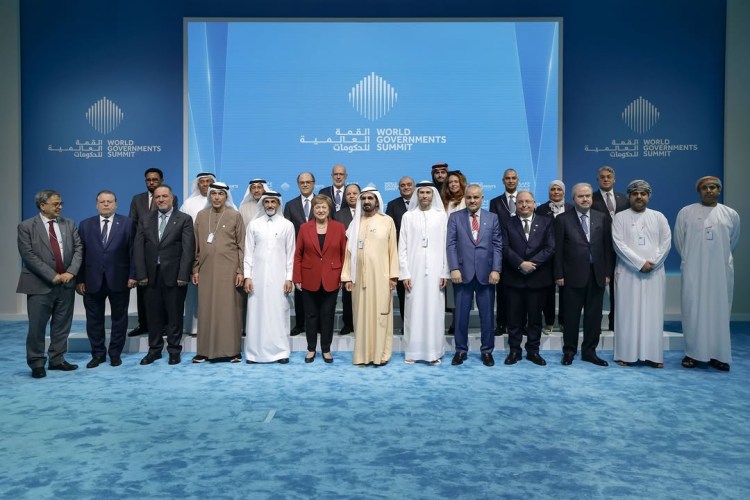
Under the ornate ceilings of Dubai’s conference halls and venue spaces, the WGS 2026 drew an unprecedented level of participation. More than 60 heads of state and government and their deputies, over 500 ministers, and representatives from 150+ nations converged in person, while thousands more engaged virtually. The total tally exceeded 6,000 participants from policymakers and economists to CEOs and social innovators.
The official agenda, meticulously structured, spanned dozens of thematic clusters from the future of work and economic resilience to artificial intelligence governance, climate adaptation, and future cities. Sessions were designed to be interactive and intersectoral, mixing high‑level plenaries with roundtables, strategy workshops, and bilateral dialogues aimed at generating actionable outcomes rather than abstract statements.
Speakers represented an extraordinary cross‑section of governance architecture: presidents and prime ministers from Asia, Europe, Africa, and the Americas; multilateral institution heads such as the Managing Directors of the International Monetary Fund and the International Finance Corporation; innovators from the private sector; and representatives of civil society who brought perspectives grounded in community resilience and social welfare.
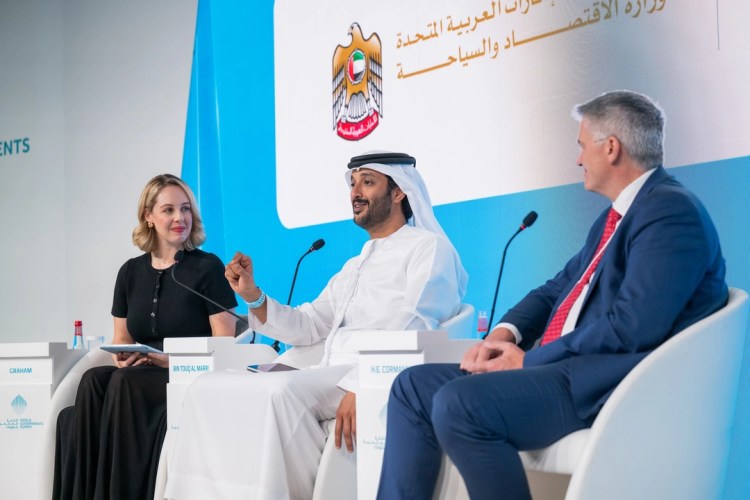
The WGS 2026’s breadth of participation was a deliberate signal: governments may lead, but they no longer govern in isolation. The era of siloed policy is giving way to one of co‑creation, where private innovation, academic research, and global civil networks must work in concert with public institutions.
The intellectual architecture of the WGS 2026 was as ambitious as its participation. Delegates dissected a spectrum of global trends reshaping the contours of governance ⬇️
(1) Governance in the Age of Technology: Artificial intelligence, data governance, and digital infrastructure occupied center stage. Leaders acknowledged that the pace of technological disruption has outstripped traditional regulatory cycles, demanding new frameworks that enhance innovation while safeguarding public trust and human rights. Sessions explored how governments can balance the promise of AI and automation with ethics, transparency, and equitable access; a discussion that transcends borders and economic tiers.
(2) Sustainable Development and Economic Resilience: In a world marked by climate volatility and uneven growth trajectories, governments exchanged experiences in designing resilient economies. Topics ranged from energy transition strategies to social protection frameworks capable of cushioning populations against economic shocks. Delegates shared case studies and policy prototypes for resilient public finance, adaptive labor markets, and inclusive growth pathways.
(3) Human‑Centered Policy: The UAE’s leadership foregrounded “human happiness and wellbeing” as a central theme. This was more than rhetorical flourish; it reflected a substantive shift toward metrics and policy goals that prioritize citizen experience alongside GDP and macroeconomic indicators. Participants discussed how governments can integrate wellbeing indices into public service delivery, education reform, and community development policies.
(4) Global South Perspectives: Voices from Africa, Southeast Asia, and Latin America were prominently featured, adding depth to discussions of development, institutional reform, and regional cooperation. For many representatives, the WGS 2026 provided a platform to articulate localized visions of governance that are adaptive, context‑specific, and people‑centric, challenging monolithic paradigms of policy transfer.
One of the most profound shifts at the WGS 2026 was its explicit focus on implementation. Beyond high‑level statements, participants committed to knowledge products and collaborative mechanisms that extend beyond the WGS’s temporal frame. An array of strategic partnership agreements were formalized including a landmark cooperation pact with the Association of Caribbean States. This agreement explicitly aims to amplify Latin American and Caribbean participation in global policy exchange and to support joint initiatives in sustainable development and capacity building.
Parallel to these institutional commitments, the WGS served as the launchpad for research outputs and analytic frameworks designed to guide policymaking into the next decade. While many of these reports will be published in the months ahead, their thematic focus on adaptive governance, future foresight, and digital readiness signals a shift toward evidence‑driven statecraft.
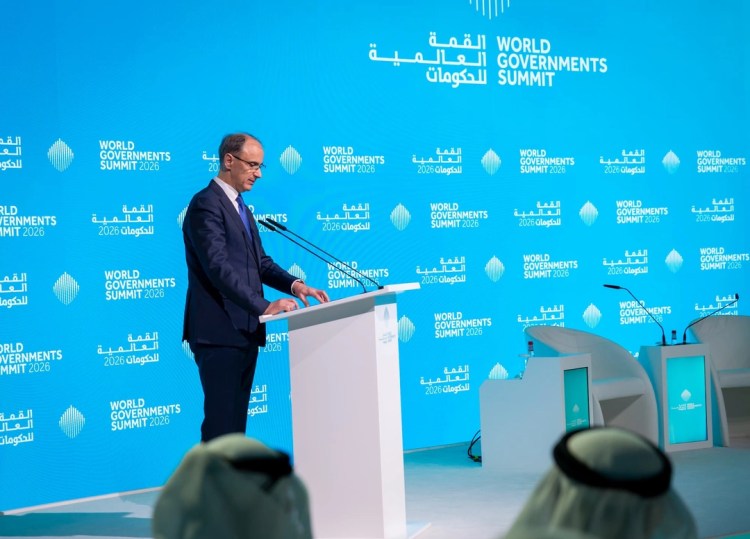
Sessions on digital transformation showcased emerging frameworks for public service modernization. Governments shared pilot projects that leverage data analytics, predictive governance, and interoperable systems to enhance efficiency and citizen engagement. In these conversations, the private sector’s role particularly in scaling solutions and contributing technological expertise was highlighted as indispensable.
Even as the WGS 2026 underscored cooperation, it reflected deeper geopolitical currents. Delegates navigated a landscape where strategic competition particularly in technology and trade continues to shape alliances and policy priorities. Governments emphasized that cooperation in areas like climate action, health systems, and digital governance is not merely desirable, but essential to collective security and prosperity.
High‑profile discussions at the WGS 2026 acknowledged that global governance structures must evolve to address multipolar realities. Participants stressed the need for inclusive rule‑making processes, the ones that bring in voices from a wider range of regions and economic contexts to ensure legitimacy and shared ownership of future governance norms.
Among the concrete policy narratives shared at the WGS 2026 were compelling examples of national innovation ⬇️
• Delegates from Africa highlighted initiatives designed to unlock private capital for infrastructure and technology adaptation, reaffirming that continental agendas are increasingly driven by domestic ingenuity as well as international cooperation.
• Southeast Asian participants showcased institutional reforms that integrate digital platforms into public administration, enhancing transparency and citizen responsiveness.
• Representatives from utility and energy sectors discussed integrated governance models that unify water, power, and sustainability planning to enhance resilience and service equity.
These case studies served not only as models of governance innovation but as conversation starters for other governments facing similar structural constraints.
Although political leaders and institutional heads dominated headlines, a parallel track focused on the next generation of policymakers and innovators. Youth engagement sessions brought student leaders, young entrepreneurs, and social innovators into the WGS’s broader ecosystem. These dialogues emphasized co‑designing future policy frameworks with youth not just as beneficiaries but as active contributors to solution design.
Beyond dialogue and debate, the WGS 2026 was marked by announcements aimed at accelerating policy solutions. Awards recognizing excellence in governance innovation though typically smaller in public profile underscored commitments to accountability and measurable impact. The final day saw leaders reaffirm strategic goals and launch forward‑looking initiatives designed to sustain the momentum generated in Dubai.
Organizers made clear that while the WGS 2026 itself is temporally bounded, its outcomes are not. Follow‑up working groups and policy labs will continue to refine and implement ideas incubated during the event, ensuring that “Shaping Future Governments” becomes more than a theme; it becomes a practice embedded into global governance culture.
When the WGS 2026 concluded, participants left with more than memories of plenaries and receptions; they took with them networks, partnerships, and an expanded sense of what governments can accomplish when they act collaboratively across borders and sectors. In an increasingly complex world, the WGS 2026 in Dubai set a new benchmark for global governance forums: one that prizes strategic foresight, inclusive dialogue, and actionable outcomes over ceremonial rhetoric. It affirmed that governments, while sovereign in mandate, are interdependent in destiny. And as nations return home, the work of translating dialogue into policy; policy into practice; and practice into measurable impact will define the true legacy of the World Governments Summit 2026.
 MAGNIFICENZA